Ground Moisture Monitoring in Olive Orchards
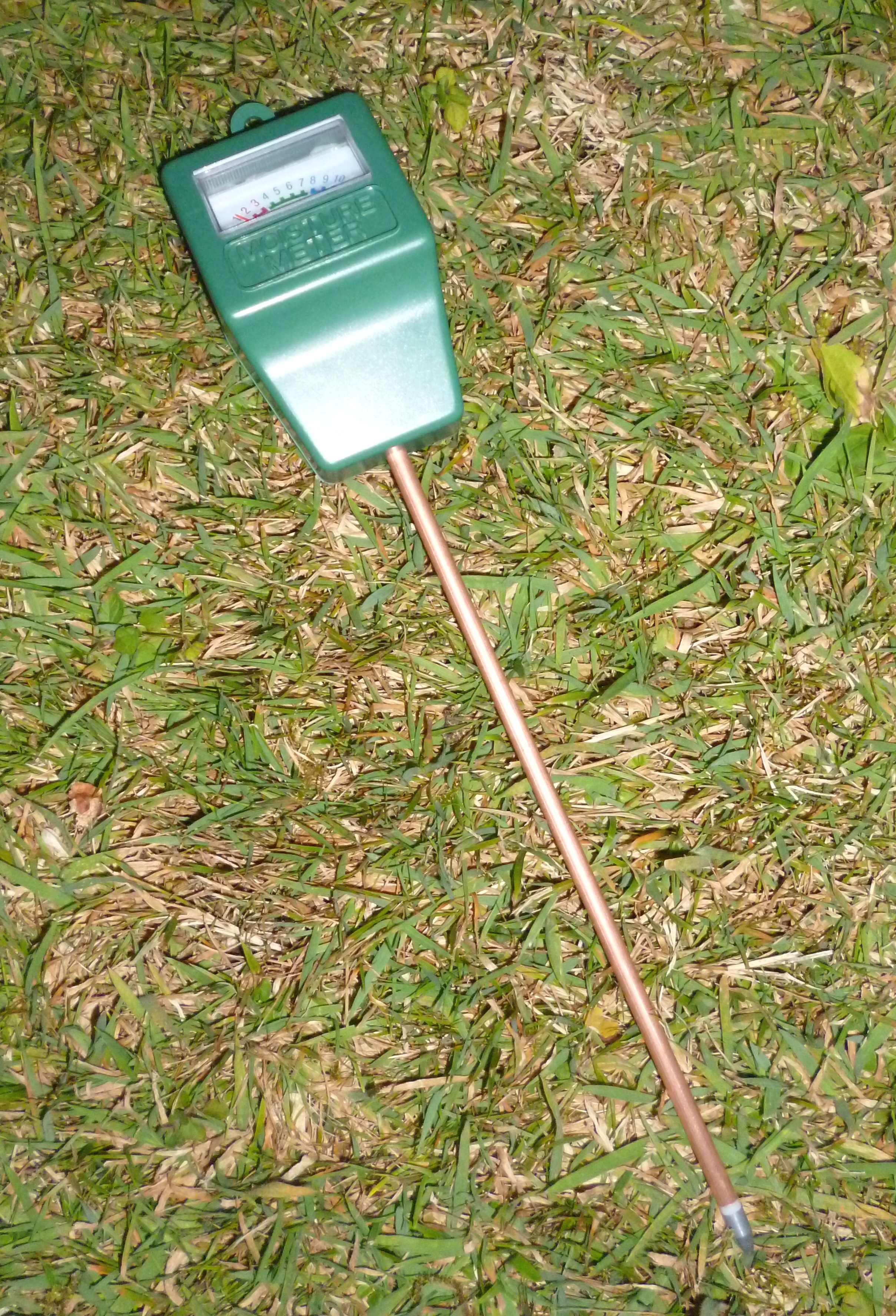
Capacitance-based soil moisture sensor in field installation. Photo: Wikimedia Commons / CC BY-SA
Irrigation in Italian olive cultivation has expanded significantly in the past three decades, driven by investment in drip infrastructure across Puglia, Calabria, and Sicily. Managing water input in these systems requires reliable data on soil water status, as over-irrigation wastes a resource that is increasingly constrained in southern Italy, while under-irrigation during critical phenological windows reduces yield and may affect oil composition. Soil moisture sensors are the most direct tool available for reading actual field conditions rather than relying solely on evapotranspiration calculations.
Sensor Types Used in Italian Olive Orchards
Capacitance Sensors
Capacitance sensors measure the dielectric permittivity of soil, which changes with volumetric water content. Widely used brands include Decagon (now METER Group) and Delta-T Devices. These sensors provide continuous or logged readings and can be connected to dataloggers for remote monitoring. Calibration for the specific soil type improves accuracy; standard factory calibrations may introduce error in high-clay or high-organic-matter soils common in parts of Calabria and Tuscany.
Tensiometers
Tensiometers measure soil matric potential in centibars or kilopascals. They are simple to install and interpret but require regular maintenance — particularly refilling the water reservoir and inspection of the ceramic cup for cracking. In sandy soils of coastal Puglia, tensiometers can respond quickly to irrigation events; in heavier soils, response time is slower and readings may lag actual root-zone conditions by 12–24 hours.
A common installation in drip-irrigated olive orchards places one sensor at 20–25 cm depth to capture conditions in the primary active root zone, and a second at 40–50 cm to detect deep percolation below the effective root zone. A reading at depth that rises consistently after irrigation indicates water is passing through the rooting zone rather than being held within it.
Irrigation Thresholds in Olive Production
Threshold values for irrigation decisions vary with soil texture, cultivar, and growth stage. Irrigation guidance from research trials in southern Italian groves typically distinguishes between two critical periods: the period before and during flowering (April–May), when water stress reduces fruit set, and the period of rapid fruit growth (June–July), when drip irrigation maintains cell expansion in the developing mesocarp.
| Phenological Stage | Soil Matric Potential (kPa) | Management Approach |
|---|---|---|
| Bud break to flowering | –40 to –60 | Maintain adequate moisture for shoot development |
| Fruit set to pit hardening | –50 to –80 | Moderate deficit acceptable |
| Rapid fruit growth | –30 to –50 | Consistent supply supports cell expansion |
| Pre-harvest (regulated deficit) | –100 to –150 | Deficit applied to concentrate polyphenols |
Regulated Deficit Irrigation
Regulated deficit irrigation (RDI) is a protocol that deliberately restricts water supply during specific phenological stages to achieve agronomic or quality objectives. In olive oil production, a controlled deficit applied in the four to six weeks before harvest has been documented in field trials to increase total polyphenol content in the extracted oil. The mechanism is linked to abiotic stress responses that activate secondary metabolite synthesis in the fruit.
The practical challenge of RDI is that the degree of stress must be monitored to avoid irreversible damage, particularly in first- and second-year drip-irrigated trees whose root systems have not yet developed the lateral spread of mature trees. Sensor data provides the feedback needed to ensure the deficit stays within the intended range rather than deepening into severe stress territory.
Remote Monitoring and Data Logging
Several Italian growers and cooperative organisations have piloted wireless sensor networks linking capacitance probes to cloud-based dashboards. These systems allow managers of large estates to monitor multiple zones simultaneously without manual site visits. Typical installations sample at 15-minute to 60-minute intervals, with threshold alerts configured to notify operators when readings exceed or fall below set values.
The cost per installation point has decreased over the past decade, making sensor arrays practical for medium-scale estates in the range of 5–20 hectares. For smaller holdings, a single sensor positioned at a representative location within the grove provides sufficient guidance for manual drip valve adjustment.

